Brain Fitness You can Trust
______________________________________________________________
Sparks of Genius is a scientific-based brain fitness center where caring professionals customize brain exercises for your child using cutting edge technology. Sparks of Genius helps students labeled as attention deficit disorder, ADD, ADHD, gifted, and learning disability. Sparks of Genius improves attention, grades and potential.
Attention problems, developmental delays and learning disabilities put many students on a negative spiral in and out of school. One reason is because attention, learning and organizational problems have minimized their achievements and contributed to low motivation and self-esteem.
The Sparks of Genius formula for success does not just focus on remediation, however. It also focuses on the many ways students are smart. Your child will improve academically when their sparks of genius are identified, ignited and nurtured.
We design a special brain fitness workout for each child to maximize brain functioning. Brain fitness is the capacity of a child to meet the many cognitive demands of life. Brain fitness has been scientifically proven to improve cognitive skills such as attention, memory, impulse control and reasoning.
Children labeled ADHD, ADD and learning disabled love coming to the brain fitness center because of its cool, cutting edge technology and positive, supportive staff. Parents love it because it may be an ADD or ADHD alternative to or supplement for medication. Teachers love it because they genuinely care about these attention deficit disorder children, who now are more motivated, confident and able to learn.
We recommend enrolling your child in Sparks of Genius as early s six or seven so they can get off to the right start in school, but we work with students of any age.
We also recommend that parents with a gifted child enroll him or her in a brain fitness program. This is because many gifted children underachieve academically due to attention problems or organization problems. Gifted children may also underachieve because the school does not have the staff to recognize and support their special talents.
Caring, experienced professionals work with students, not diagnoses, identifying and supporting their strengths and sparking their genius. Your child can learn to overcome any label and soar to new heights of accomplishment!
The first step in the program is testing to assess your child’s attention skills and sparks of genius. Each student then receives their own personalized brain fitness program, which is modified as they progress. Students come to the brain fitness center two to four times a month for 3-6 months.
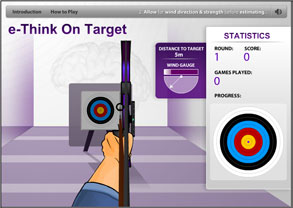
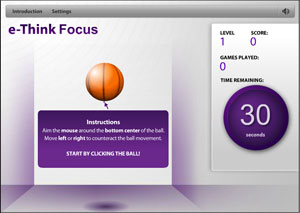
A personal trainer supports them as they work out with neurofeedback and other cutting edge technology. Some ADHD, ADD, and LD students also do brain fitness workouts on a home computer.
Their customized brain fitness workouts build the fundamental skills essential for academic and real-world success — skills like focusing, remembering, listening, organizing and thinking. You will see improvement in academics, family relationships and self-esteem.
Boys and girls love to discover and express their sparks of genius. It’s something missing in most schools and essential for developing a happy, healthy, confident, well-rounded child.
There are a lot of programs for kids with attention and learning problems in Boca Raton and South Florida. How do you know which one is right for your child?
Think of us as a concierge program for brain fitness. We find the best combination of brain fitness, cognitive training and sparks of genius software to create the optimal brain fitness work out for your child.
Sparks of Genius provides a dynamic, scientific-based fun experience with proven success that identifies, ignites and nurtures the many ways your child is uniquely smart.
We have been in business since 2001 with a proven record of success. Your child is “a piece of divine light riding through the world” who came into this world for a special reason. Our job is to help them maximize their full potential. Together we can.
Brain Fitness You can Trust
______________________________________________________________
Tips to Transformation
By Dr. Rohn Kessler
1. Identify, ignite and nurture strengths
There are many ways to be smart. Schools focus on several of them (verbal, mathematical) but often ignore others (musical, spiritual, personal, spatial, and kinesthetic). Noticing how your child is smart is one of the best gifts that you can give. Look beyond, but do not minimize the importance of, the three R’s of reading, writing and arithmetic.
Children with attention and learning problems often have untapped artistic gifts. Academics can even be improved when you go through this “back door.” Recent scientific research from world-class cognitive neuroscientists from the Dana Consortium shows close relationships between training in the arts and improved math and reading scores.
Arts training can improve the efficiency of brain networks underlying attention. “One leading theory of how arts training influences cognition is that children who are interested in art are motivated to practice their particular art form with focused determination. Motivation leads to sustained attention, which in turn leads to greater efficiency of the brain network involved in attention and to cognitive improvement.”
To get more “how-to” specifics on nurturing your child’s strengths, read Your Child’s Strengths: Discover Them, Develop Them, Use Them by Jennifer Fox
Bottom line: Expose your children to a variety of artistic, musical, dance, theatre and martial art experiences. Reinforce and enhance any interest. Show them the next steps they can take to transform their interests into reality.
2. Dispense daily doses of “psychological vitamins.”
This term was invented by my mentor, the noted pediatrician Dr. William Grant Crook, who recognized how important confidence and motivation are to healthy childhood development.
Children need to develop cognitive, intellectual, emotional, behavioral and spiritual health. They need feedback in all these areas so they can learn when they are on the right track and going in the right direction.
Do not become a “praise junkie,” giving a constant stream of empty, nonspecific praises. Rather make sure you reward effort rather than simply saying something like “You’re smart.” It turns out that many kids think “Hey, if I’m smart, then I don’t need to put out much effort.” Surprisingly, research shows that having high self-esteem doesn’t necessarily improve your child’s grades or career achievements.
Effort is what you want from your children. Best effort. Do not feel like you’re walking on eggshells when you give your children honest feedback that they failed a question, test, or game. They don’t need emotionalism, criticality, guilt or disappointment but they do need accurate information. They can learn to overcome frustration and failure if you teach them how to persevere until they succeed.
Bottom Line: Parental praise needs to be specific and sincere.
3. Inspire your child to overcome labels and limitations
Labels like attention deficit disorder, Asperger’s syndrome, auditory processing disorder and the like can be helpful to clinicians. However, they do not help children improve academic skills, get better grades or accomplish more in life. Neither do labels like clumsy, lazy, stupid, hopeless, slow learner, shy, daydreamer, or trouble maker.
If your child has been “labeled” know that he or she is in good company. An executive at Universal Studios told Clint Eastwood that he “had no future as an actor” because he had a chipped tooth, an Adams apple that was too prominent and he talked too slow.” Fred Astaire failed his screen test too. They said he had thinning hair and “could dance a little.” Best-selling author Scott Turow got an “F” in his high school English class. Research confirms that thousands of successful entrepreneurs today have overcome labels like learning disability, ADHD and dyslexia.
Unfortunately millions of students never learn to overcome childhood labels. Here are some tools to help your child move beyond labels and limitations decided by others:
Bottom Line: Teach your children how to tap into their inner resources by identifying, igniting and nurturing their strengths.
4. Improve cognitive and executive function skills
Children need to develop attention stamina, memory, self-control and listening skills to succeed in life. They benefit hugely from learning how to organize, plan, prioritize and make good decisions.
These skills provide the essential foundation for all learning. It is critical your children develop a love of learning and “learning how to learn” so they can become confident, independent, imaginative and adaptable people throughout their lifetime.
Physiological and psychological learning processes so are important that they can actually act as a vaccine against cognitive decline and neurodegenerative diseases in later life.
Bottom line: Find brain fitness games and exercises that develop cognitive and executive function skills.
5. Provide a good night’s sleep and a healthy diet that is right for your child
While there is a lot of controversy about nutrition, ADHD and learning disabilities, it makes sense to eat healthy. Organic, local and non-processed foods are best. Omega 3 fatty acids from cold water (but not farm-raised) fish such as salmon, herring and mackerel may help.
Allergies, environmental toxins and food and chemical sensitivities are other controversial areas. Do your best to provide your children with clean air and water. Protect them from air and noise pollution. My experience is that certain foods, chemicals and environmental toxins definitely can interfere with optimal brain functioning.
Sleep is critical to your child’s health, but today’s over-stimulated, overscheduled kids are often sleep deprived. Research shows that sleep deficiency reduces cognitive abilities and test scores. Plan for your child to “decompress” before going to sleep. TV or computer time is not recommended as part of a pre-bedtime routine because light emitted from the screen can actually delay sleep.
Bottom line: Make sure your child has a diet that works for him and consistently gets a good night’s sleep.
6. Promote physical activity
In addition to brain fitness exercises, children benefit immensely from physical activities that promote strength, stamina, balance, flexibility, coordination, grace and speed. These include swimming, bicycling, dancing, skating, hiking, and aerobic sports such as basketball, tennis and soccer.
Physical exercise and aerobic activities definitely help develop healthy brain structure and function in children. When they become adults it correlates with higher levels of cognition and delays the onset of cognitive decline and dementia.
Bottom line: Expose your child to a variety of physical activities to improve strength, stamina, balance, flexibility, coordination, grace and speed.
7. Create and maintain a peaceful home
Along with joy, kids create chaos, especially those labeled ADHD, gifted, learning disabled, Asperger’s or special needs. Nevertheless, it is important to create a peaceful and supportive home atmosphere. One way that you can start is to pay attention to all the positive things your children do – whether it’s sitting quietly or cleaning their rooms. With some children you have to watch for even a small positive behavior and then pounce on them with an acknowledgement. But the more they can get positive reinforcement, the more you have to build on and the closer you come to creating a peaceful home.
Parents of special needs children have been given a challenge as well as an opportunity. A helpful parenting approach can be found in Transforming the Difficult Child and All Children Flourishing by Howard Glasser and Respectful Parents, Respectful Kids by Sura Hart and Victoria Kindle Hodson.
Bottom Line: Special kids are a gift but it helps to know what works best for them.
8. Instill a continuous improvement of character traits
Instilling character in your children is important for their success as people in the world. These five are a good starting place: strive for truth, practice personal responsibility, have faith and courage, be a mentsch and press on regardless.
Strive for truth means you have a deep desire to know what is real, what is important and what is not. Personal responsibility means that you are 100% accountable for everything you say, think, feel and do. Having faith is your ability to courageously and joyfully confront things like fear, uncertainly, hardship and pain with dignity. Being a mentsch means being an upstanding person and doing the right thing, especially when things are difficult. Press on regardless means you have the fortitude to persevere no matter what the test.
Bottom line: Children develop character and values based on what you do. Cultivate the character traits you believe are important for living a happy, healthy, meaningful and fulfilling life.
9. Build social skills.
On the Brazen Careerist blog, there’s an article about a boy with Asperger’s Syndrome with a high I.Q. and a notable lack of emotional intelligence. Just how well do you think this youngster will do? There are basic skills about getting along in the world that can benefit every child. They are listed in “12 Social Skills for Kids to Balance with the 3 R’s.” I’ll paraphrase them here:
Bottom line: Intelligence and good grades do not necessarily make for success in life. Social and emotional intelligences do. To succeed after school, your child needs communication and interpersonal skills, original and visionary thinking, leadership skills and the ability to work well with a team. Do you best to educate your child in all these areas as well.
10. Make a plan
You can read self help tips forever, but they won’t do their job until you incorporate them into your life. If any of these tips were helpful to you, write down some goals for yourself and your child and implement them, step by step, goal by goal.
Bottom line: Write one goal right now and outline some steps that you can take to achieve it.
Brain Fitness You can Trust
______________________________________________________________
Amy Price, Ph. D
Teamwork means everything in work with children. Team interactions build your child’s self esteem and ways of relating. Even graduate students learn that flexibility and cooperation are the keys to scientific advancement. Many experiments show success only after repeated failures. Sometimes it takes only a new way of seeing to trigger a break through. We can mourn the past or prepare for the future, we can not do both. Often weakness in one team member will trigger unknown strength in another. It pays to obey the three fs of creativity; fun, flexibility and favor.
Blessed are the flexible, for they shall not be broken
One day I needed a stick for marshmallow roasting. The old ones were easy to separate from the branch but were dry and brittle. The young ones gained strength and life from the tree and could not be broken.
This is like your relationship with your family. When we are connected to each other we are strong. When we allow the stress of life to separate us from our loved we begin to dry from the inside out. This applies to older people too.
When I was small and Christmas was over, I wanted to replant the Christmas tree. My mother laughed and said it was already dead because its roots had been cut. I was sure she was wrong and planted it anyway! I rejoiced because it was so cold it looked like my mother was wrong. When a warm spell came death became apparent.
Our families are our roots and we are the roots for those we work with. We can choose to be roots that help them grow or just leave them alone and see how they do. Remember that live trees are a source of shade and beauty; dead trees are ugly and take a lot of work.
The Serenity Prayer
Many years ago there were two gifted artists. They were poor and scholarships went to the politically astute so they were on their own with talent and no money. They devised a plan. The one brother went into the mines to work and support the other while he went to graduate school. This brother, spurred on by the help of his brother graduated with honors and became widely acclaimed. He went back to his brother with joy and said “I can put you through school with class”. The other brother without bitterness lifted up his hands to show them to his brother, they were broken and crooked from years in the mines. He said “I can not go, the mines have cost me my hands” The artist did a sculpture of his brothers hands, they became his greatest work. Most of us know them as they became the image for the famous serenity prayer. In life sometimes we are the hands and at other times the artist. It is good to consider the cost to our team and provide feedback and favor before hands are destroyed.
God, give us grace to accept with serenity the things we cannot change,
The courage to change the things we can that,
And the wisdom to know the difference.
-Reverend Reinhold Niebuhr (1930-40)
The next story, The Window, gives a vivid example of how we can color one another’s world.
The Window
It will take just 37 seconds to read this and change your thinking.
Two men, both seriously ill, occupied the same hospital room. One man was allowed to sit up in his bed for an hour each afternoon to help drain the fluid from his lungs. His bed was next to the room’s only window.
The other man had to spend all his time flat on his back. The men talked for hours on end. They spoke of their wives and families, their homes, their jobs, their involvement in the military service, where they had been on vacation.
Every afternoon, when the man in the bed by the window could sit up, he would pass the time by describing to his roommate all the things he could see outside the window.
The man in the other bed began to live for those one hour periods where his world would be broadened and enlivened by all the activity and color of the world outside.
The window overlooked a park with a lovely lake.
Ducks and swans played on the water while children sailed their model boats. Young lovers walked arm in arm amidst flowers of every color and a fine view of the city skyline could be seen in the distance.
As the man by the window described all this in exquisite details, the man on the other side of the room would close his eyes and imagine this picturesque scene.
One warm afternoon, the man by the window described a parade passing by. Although the other man could not hear the band - he could see it in his mind’s eye as the gentleman by the window portrayed it with descriptive words.
Days, weeks and months passed.
One morning, the day nurse arrived to bring water for their baths only to find the lifeless body of the man by the window, who had died peacefully in his sleep. She was saddened and called the hospital attendants to take the body away.
As soon as it seemed appropriate, the other man asked if he could be moved next to the window. The nurse was happy to make the switch, and after making sure he was comfortable, she left him alone.
Slowly, painfully, he propped himself up on one elbow to take his first look at the real world outside. He strained to slowly turn to look out the window besides the bed.
It faced a blank wall.
The man asked the nurse what could have compelled his deceased roommate who had described such wonderful things outside this window. The nurse responded that the man was blind and could not even see the wall. She said, “Perhaps he just wanted to encourage you.”
Epilogue:
There is tremendous happiness in making others happy, despite our own situations.
Shared grief is half the sorrow, but happiness when shared, is doubled.
If you want to feel rich, just count all the things you have that money can’t buy.
Today is a gift; that is why it is called “The Present.”
Brain Fitness You can Trust
______________________________________________________________
Adult Protect Your Memory Program
Sparks of Genius provides customized, scientific based brain fitness workouts using cutting edge technology personalized for you and delivered by caring professionals.
Brain fitness is the capacity of an individual to meet the many cognitive demands of life. Brain fitness has been scientifically proven to improve cognitive skills such as memory, concentration, processing speed, organizing, and reasoning.
Whether your are a senior misplacing the car keys, concerned that it could be early stage Alzheimer’s; an executive or professional who needs to be mentally sharp to meet the demands of your job; a baby boomer who wants to prevent memory problems or delay cognitive decline; a college student overwhelmed by academic challenges; a multitasking mom or an accident survivor with minimal brain dysfunction, we have the memory software that can work for you.
Many people are concerned about memory loss, and if they are not concerned, often their families are. As we get older, it is normal to start forgetting things such as appointments, names or where we put things. Age-related memory loss is defined as “a mild decline in memory and processing speed.” It happens to everyone and does not necessarily turn into dementia.
Some adults with memory problems have mild cognitive impairment. This is a transition stage between the normal aging and the more serious memory problems caused by Alzheimer's disease or by other dementias. About 10 – 15% of the people diagnosed with mild cognitive impairment develop dementia every year.
We specialize in keeping the brain functioning at its maximum potential, reducing the symptoms of age related cognitive decline, delaying the onset of mild cognitive impairment or dementia and in helping adults with the early stage Alzheimer’s disease slow down its progression.
Brain Fitness work outs are similar to going to the gym and working out with your own personal trainer. Just as exercising your body maintains health and physical fitness, so exercising your mind maintains and increases memory and brain health.
Because your brain stimulation work out is customized for you and administered by a caring professional, you are not wasting your time or your money.
You’ll enjoy coming to the Boca Sparks of Genius Center for your memory program four to eight times a month for 3-6 months. You’ll “work out” with cutting edge technology under the care of an experienced personal trainer. You may also work out on a home computer.
There are a lot of memory programs out there. How do you know what is right for you? Think of us as a concierge program for brain fitness. We’ll find the memory software and create a brain fitness work out that is right for you, for your brain and for your lifestyle. We have been in business since 2001 with a proven record of success.
Brain Fitness for Memory Loss is designed to create and maintain optimum brain health and to prevent the development and progression of early stage Alzheimer’s disease. Our memory programs prevent, slow down, stop or reverse memory loss. They keep you mentally sharp so you can enjoy your life, your loved ones and your memories.
Brain Fitness You can Trust
______________________________________________________________
Tips for Protecting Your Memory
By Ninah Kessler, LCSW
Can’t find your cell phone? Forgetting names? Is multitasking becoming more challenging? Want to sharpen your cognitive abilities? Do you have mommy brain? Are you an executive with lots of responsibilities? Have you been diagnosed with the beginning stages of Alzheimer’s or with mild cognitive impairment? Whether you are experiencing age related cognitive decline, want to be at the top of your game or have been given a “diagnosis” from your doctor, there are some simple and fun things that you can do to protect your memory.
1. Don’t worry, be happy
Our memory works better when we are relaxed and having fun. When we are enjoying ourselves, our bodies are not producing cortisol and other stress hormones which impede mental functioning. Everyone likes to do different things, but we can’t enjoy them unless we do them. Make a list of 10 things that you like to do and take time to do one of them at least once a week.
2. Travel
A client who returned from Europe reminded me how important it is to get away to get perspective. The brain loves the new and novel experiences that travel creates. Not only are you exposed to new people, new places and different cultures, but you can often try your hand at a new language as well. If you can’t leave the country, go to a new park or a new restaurant or be an armchair traveler.
3. Learn something new or take something you know to a higher level
Lifelong learning stimulates the formation of new neural pathways to replace the ones that are dying off. If you’ve always wanted to play bridge or golf, now is the time. If you already play bridge or golf, take it to the next level. Learn a musical instrument; take art or chi gong; study genealogy. It is true that you could have learned the violin 50 years ago, but the next best time is right now.4. Use Computerized Brain Workouts
Computerized Brain Workouts are the latest and greatest way to exercise your brain. There’s a lot out there and much of it is very good. However, if you get something that is too difficult, you can get frustrated and not use it. If you get something that’s too easy, you can get bored and not use it. Or you can get a program that does not provide the kind of mental stimulation that you need. At Sparks of Genius we use technology to customize brain workouts that provide just the right kind and degree of mental stimulation for you.
5. Take care of your body
Mickey Mantle said, “If I knew I was going to live this long, I would have taken better care of my body.” Although the past matters, the present is the only thing we can change.
The holy trilogy for body health is good nutrition, physical exercise and adequate sleep. Basically the foods that are good for your heart are also good for your body, so you get two for one. Get plenty of fruits and vegetables, omega 3 fatty acids (like the kind found in salmon, herring and anchovies) and eat enough protein, preferably the lean kind. A multi-vitamin covers many bases as well.
There are some “fun” foods that are also good for your brain. It benefits from the antioxidants in dark chocolate, from the caffeine in coffee and a glass or two of red wine is helpful as well. Of course, these are best used in moderation.
You don’t have to be an exercise “nut” to get benefits, although if you are able to run a marathon, you have my blessings. A study by the Group Health Cooperative in Seattle found that as little as 15 minutes a day of modest exercise (walking) three times a week reduced the risk of developing dementia by 30%. You can exercise in a wheelchair or you can climb a mountain. Find something you like, whether it is mall walking or a spin class.
Being sleepless in Seattle or anywhere else is harmful to your memory. During sleep we consolidate spatial tasks and organize personal recollections. We strengthen facial recognition and the memory for events. We move information into our long term memory banks. The University of Pennsylvania found that sleeping 4-6 hours a night can impair cognition as much as if you stayed up for two full nights. Lack of sleep is just one cause of “mommy brain”. Sleeplessness is hard on executives as well.
It’s more important to sleep once we get over 40, because that’s when “slow wave sleep”, which helps us consolidate memory, virtually disappears.
Taking care of your body also includes keeping your blood sugar, blood pressure and cholesterol under control, because these can lead to cognitive decline as well.
6. Make New Friends and Keep the Old
There are numerous studies indicating that people who are unmarried or socially isolated are at higher risk of dementia. When we are working, our work life is often a source of socialization. This can disappear in retirement or in telecommuting. Not only do we have an innate need to connect with others, but talking widens our horizons and makes life more interesting. As much as possible, maintain those dinners, card parties, golf dates and theater trips with friends.
7. Help others and practice gratitude
I always remember that old adage, “I complained because I didn’t have shoes until I saw someone without feet.” I personally prefer shoes to match every outfit, but I make it a practice to have some “gratitude” moments every day. There is always someone less fortunate than you and there is always something to be grateful for. After the hurricanes hit Florida, I became very grateful when we got our electricity back and I had hot water. I was also grateful that neither my house nor my car were destroyed. I try to be grateful when the sun comes out, and if there are clouds, I try to remember that the sun is still shining behind the clouds.
Sometimes helping others helps us to realize how much we have to be grateful for. Even people with memory loss can contribute to the planet. They may not remember what they have read, but they can still read to their grandchildren or teach literacy.
8. Learn how to handle stress
Stress elevates our cortisol levels which decreases our brain functioning. Books have been written about handling stress, so I won’t elaborate here. You need to find what works for you. At Sparks of Genius clients learn to use special stress reduction technology to reduce stress, increase health and balance their lives.
9. Have something that you believe in
Remember the Peggy Lee song, “Is That All There Is?” Everything you get to in the material world can disappear. This is especially important with all the losses we experience as we get older – I mean as we mature. It is easier if you develop a spiritual strength that can help you to carry on.
10. Use compensatory strategies for skills that you have lost
Some people have been able to remember telephone numbers all their lives. Then they get to a certain point and they start forgetting them. It’s easy to get discouraged about this “cognitive” decline. But it’s also easy to get an address book or to program the numbers into your cell phone. That’s a compensatory strategy. Other people are always losing their glasses. They may need some way to keep them around the neck. Lists are a major compensatory technique, but you have to remember where you put them.
11. Accentuate the Positive
The glass can be half full or half empty and it matters how you see it. People who believe that the situation is awful and will always remain bad are the ones who get depressed. Our thoughts are powerful. There are numerous ways to reframe things so that we can see the gift in everything. Some people do this naturally, others can learn it.
Even if we are already “diagnosed” with dementia, we are still people. We’ll always have some skills, even if some things fall by the wayside. So do we focus on what we have lost or what we still have? Do we get depressed because we have more wrinkles or are we grateful to have “another round above ground?” The more gratitude that we have, the more we believe that it is all for the good, the happier we will be. And the happier that we are, the better our brains will work. So accentuate the positive and have a great day.
Brain Fitness You can Trust
______________________________________________________________
Rohn Kessler, ED. D. and Amy Price, Ph.D.
“The brains of adult mammals are slowly, constantly churning out new brain cells,” it said recently in LiveScience.Click here for the full article.
That’s right, adult brain cells can definitely keep growing and actually change their structures in response to new experiences.
The growth is much smaller than what goes on during the critical period of development, but the fact that it goes on at all is earth-shattering, “said a neuroscientist at the Massachusetts Institute of Technology (MIT).
New research shows these new adult brain cells may actually help old cells adapt to new experiences and be used to rejuvenate our aging brains.
“Young neurons are generated in two areas of the brain: the hippocampus and the olfactory bulb. The hippocampus, in particular, appears almost like a fountain of youth. The new cells produced in the area, said neuroscientist Hongjun Song, make the whole system younger.”

New neurons are labeled to show green fluorescence in the adult mouse brain.
Credit: Kurt Sailor, Guo-li Ming and Hongjun Song
Most of us know how fast children learn — much faster than we do. Their brain plasticity is phenomenal. But we adults can continue to adapt to new experiences even though our brains are more hardwired than our children’s brains.
At Sparks of Genius we see this all the time in children as young as six and “boomers and beyond, including adults in their eighties and nineties. Both young and old are capable of new learning.
New learning is very important for all adults. Not any kind of learning but novel, rich, complex and meaningful learning. No matter your age or your situation, engage your mind in mentally stimulating activities.
College students, adults and “boomers and beyond” at Sparks of Genius receive a special combination of high tech and low tech brain fitness exercises to improve memory, mood and mental sharpness.
Adults of all ages love using cutting edge technology, and appreciate that their scientific- based workouts are personalized just for them and delivered by such caring professionals.
The Sparks of Genius message is:
Defy labels.
Tap your inner resources to create your own destiny.
Move beyond limitations decided by others.